

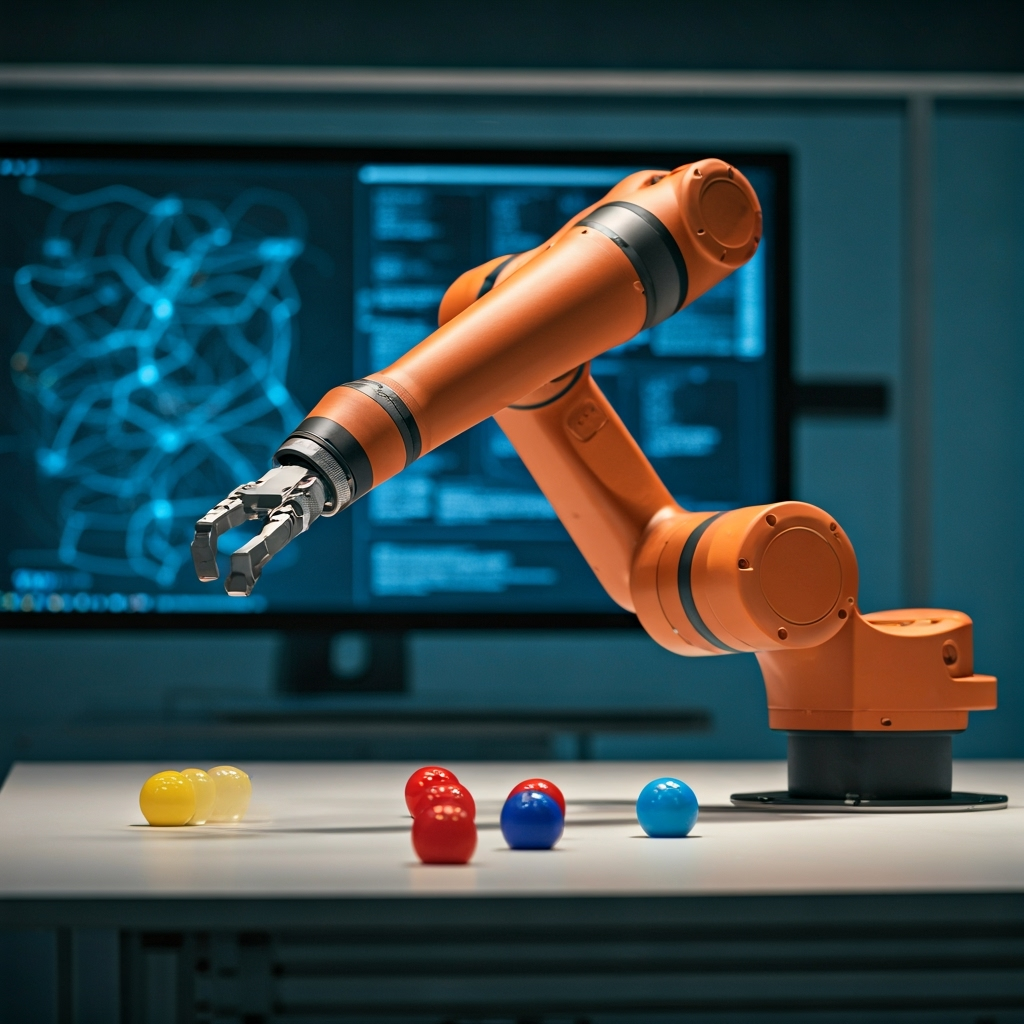
Google DeepMind has introduced a new artificial intelligence model for robotics, SARA-RT, designed to make machines more decisive and efficient. The new architecture aims to solve a common problem in robotics where machines break tasks into an excessive number of small steps, leading to slow and inefficient operation.
Announced via a company blog post, SARA-RT, which stands for Stochastic Action-Representation-Action for Robotic Transformers, represents a significant shift in how robotic systems learn and execute commands. Unlike previous models that process vast amounts of visual data to decide on every granular movement, SARA-RT learns to group actions into more cohesive, higher-level behaviors. This “action-centric” approach allows the robot to condense what might have been ten small steps—like adjusting its grip five times before lifting an object—into a single, fluid command.
According to Google’s researchers, this method significantly improves both training speed and performance. By focusing on the *consequences* of actions rather than just raw pixel data, SARA-RT can be trained more effectively on less data. In tests, robots equipped with the new model demonstrated a 50% reduction in training time and a 14% improvement in task success rates compared to earlier systems.
This breakthrough addresses a key bottleneck in deploying robots in complex, real-world environments. By reducing the computational overhead and eliminating “analysis paralysis,” SARA-RT could accelerate the adoption of robotics in fields like logistics, manufacturing, and eventually, in-home assistance. The development builds on Google’s previous work with models like Robotic Transformer 2 (RT-2), signaling a concerted push by the company to create more capable and autonomous robotic systems that can operate safely and effectively alongside humans.
 English
  Deutsch