

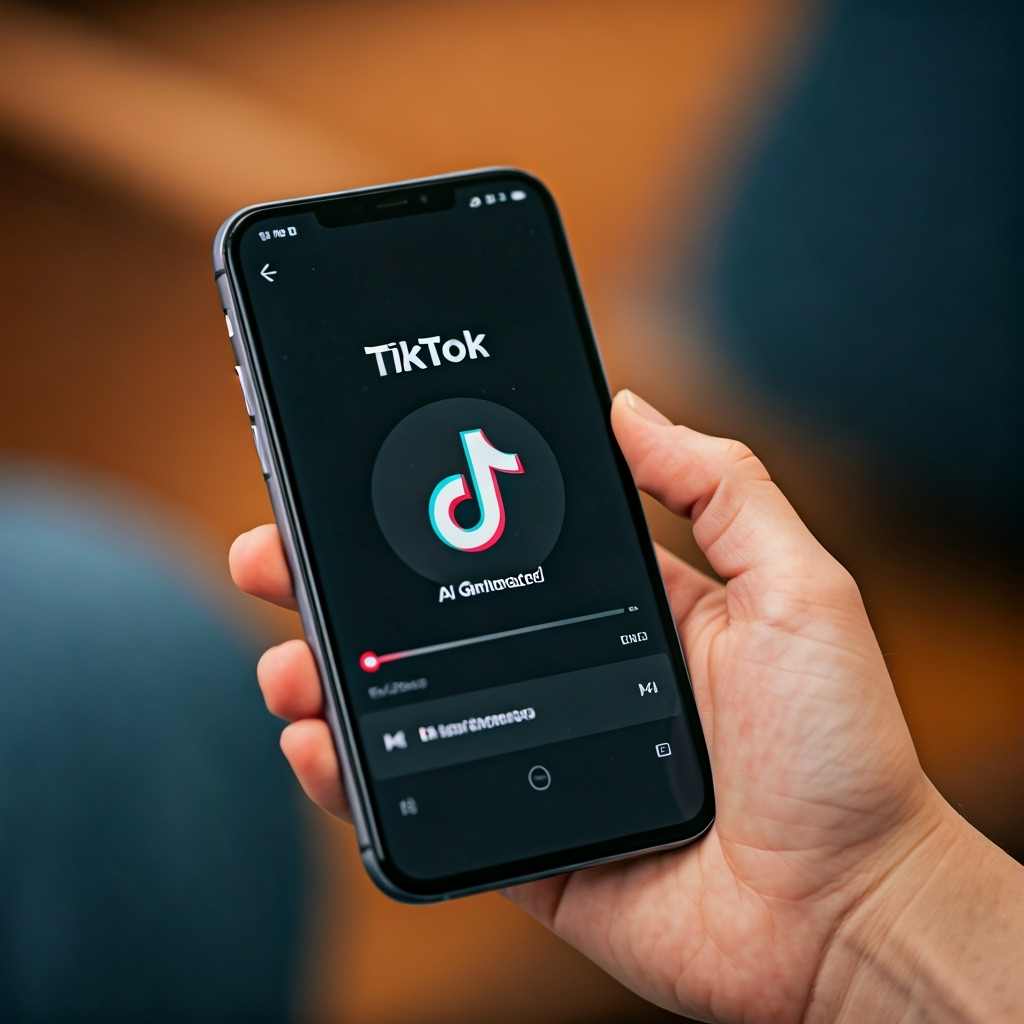
SAN FRANCISCO, CA – TikTok announced today the global rollout of a new system to identify and label AI-generated content (AIGC), a significant move aimed at increasing transparency and combating the spread of realistic misinformation on its platform. The new policy requires creators to explicitly label any AI-generated content that depicts realistic scenes or people, and it will automatically apply labels to content created using TikTok’s own AI effects.
The platform is leveraging Content Credentials, a technology developed by Adobe’s Content Authenticity Initiative, which attaches metadata to content to serve as a digital “nutrition label.” This metadata will help TikTok automatically detect and label AIGC created on other platforms that support the standard. For content made with third-party tools that do not include this metadata, TikTok has introduced a new, simplified tool in the creator workflow, making it mandatory for users to disclose when they upload realistic audio or visuals generated by AI.
This initiative comes at a critical time, as hyper-realistic AI-generated “deepfakes” become increasingly sophisticated and accessible, posing a significant threat to information integrity, especially during a major global election year. Platforms like Meta and YouTube have already implemented similar labeling policies to provide users with more context about the media they consume.
In its announcement, TikTok emphasized that the goal is not to stifle creativity but to ensure users can distinguish between fact and fiction. While the automatic detection through Content Credentials is a major step forward, the policy’s overall effectiveness will heavily rely on creator compliance and TikTok’s ability to enforce the manual labeling requirement. Failure to label synthetic content could result in its removal. This move positions TikTok alongside other major tech companies in the ongoing effort to establish a standard for responsible AI deployment and maintain user trust in the digital ecosystem.
 English
  Deutsch