

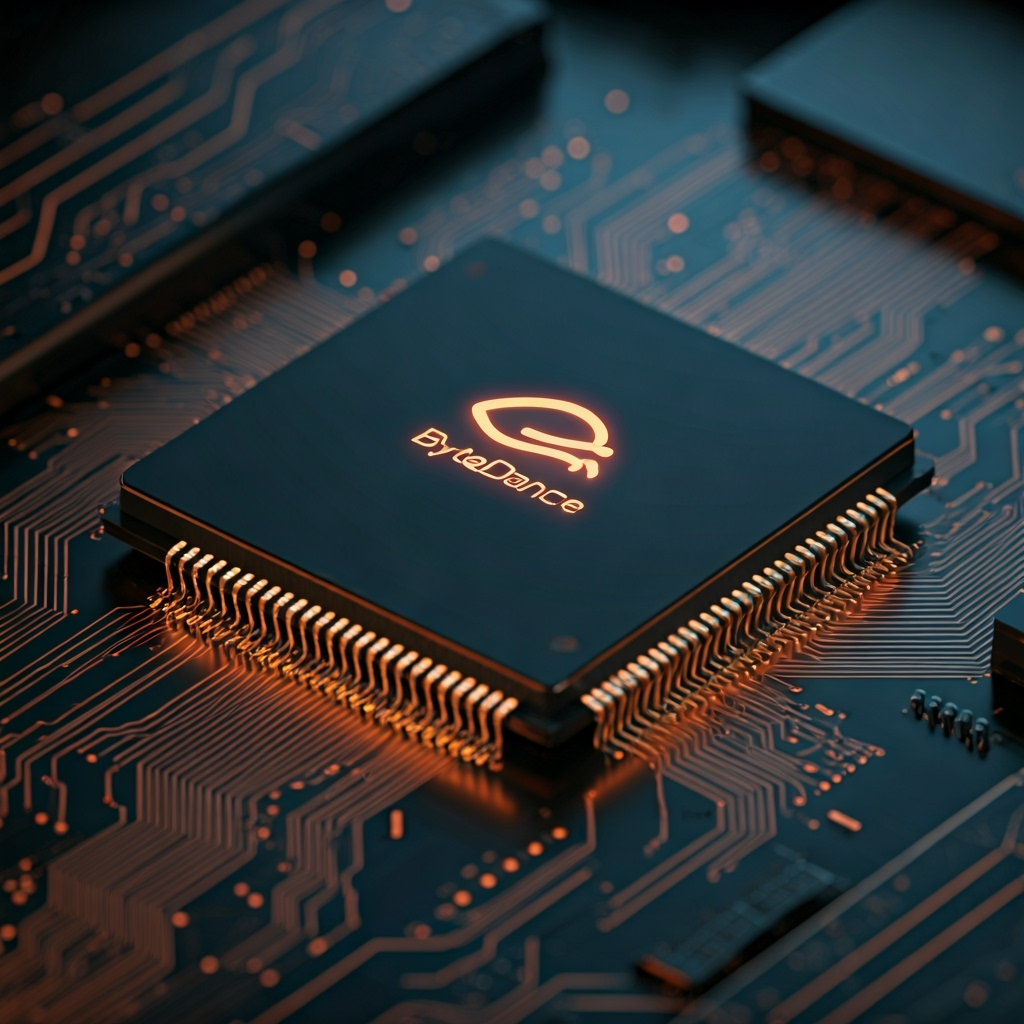
In a significant move to secure its position in the global AI race, ByteDance, the parent company of TikTok, is reportedly developing its own advanced AI chip. The custom-designed 3-nanometer (3nm) processor is aimed at ensuring a stable supply of high-performance silicon for the company’s diverse applications, ranging from its popular social media algorithms to its expanding cloud computing and generative AI ventures.
This strategic pivot is largely seen as a direct response to escalating U.S. export controls, which have restricted Chinese companies’ access to top-tier AI accelerators from market leader Nvidia. By bringing chip design in-house, ByteDance seeks to reduce its reliance on foreign technology and mitigate the impact of geopolitical tensions on its hardware supply chain.
According to sources familiar with the matter, ByteDance is collaborating with the U.S.-based chip designer Broadcom and plans to have the chip manufactured by the Taiwan Semiconductor Manufacturing Company (TSMC), the world’s leading semiconductor foundry. While the chip is not expected to directly compete with Nvidia’s most powerful offerings at launch, it represents a critical step toward technological self-sufficiency.
Developing a custom AI chip allows ByteDance to create hardware specifically optimized for its unique workloads, potentially leading to greater efficiency and performance for its data-intensive platforms. This initiative places ByteDance alongside other tech giants like Google, Amazon, and Meta, which have also invested heavily in designing their own silicon to power their AI and cloud services. The project underscores the growing trend of major technology firms vertically integrating their operations to gain a competitive edge in the rapidly evolving AI landscape. The success of this endeavor could significantly influence China’s broader ambitions to build a domestic semiconductor ecosystem.


 English
  Deutsch