

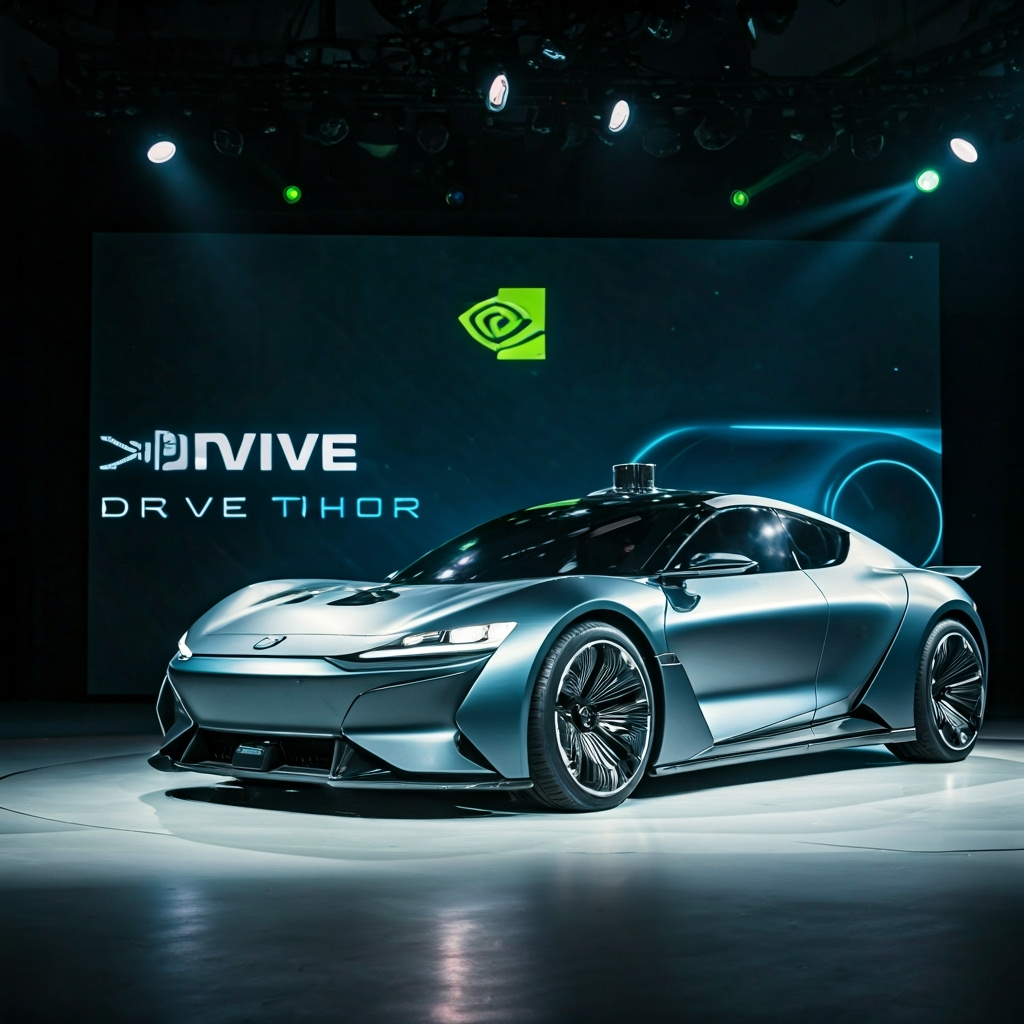
Chinese electric vehicle manufacturer Leapmotor has officially announced a significant partnership with Nvidia, selecting the American tech giant’s next-generation Drive Thor platform to power its upcoming fleet of vehicles. The collaboration, unveiled this week, will see Leapmotor integrate the powerful AI-driven system-on-a-chip (SoC) into its new EVs slated for production starting in 2025.
Nvidia’s Drive Thor is a highly advanced, centralized car computer designed to unify a wide array of in-vehicle functions, from automated and autonomous driving to digital instrument clusters, infotainment, and passenger monitoring. The automotive-grade chip boasts a staggering 2,000 teraflops of processing power, enabling it to run complex AI and deep learning models essential for next-generation smart vehicles. Leapmotor plans to leverage this capability to deliver enhanced safety features and a more sophisticated, AI-powered user experience.
The decision is particularly noteworthy given the broader context of US-China trade relations and the ongoing push for technological self-sufficiency within China. Despite these tensions, Leapmotor’s choice underscores the current performance leadership of American firms like Nvidia in the specialized, high-performance AI hardware sector. While China has made significant strides in chip design, the most advanced automotive AI platforms remain dominated by established players.
This partnership also follows Leapmotor’s recent strategic alliance with global auto conglomerate Stellantis, which is aimed at expanding the Chinese brand’s presence in international markets. By building its next global vehicle platform on Nvidia’s cutting-edge technology, Leapmotor is positioning itself to compete not just on price, but also on technological prowess. The move signals that for now, access to the best available components is paramount for Chinese EV makers with global ambitions, creating complex but continuing interdependencies between the two nations’ tech ecosystems.
 English
  Deutsch