

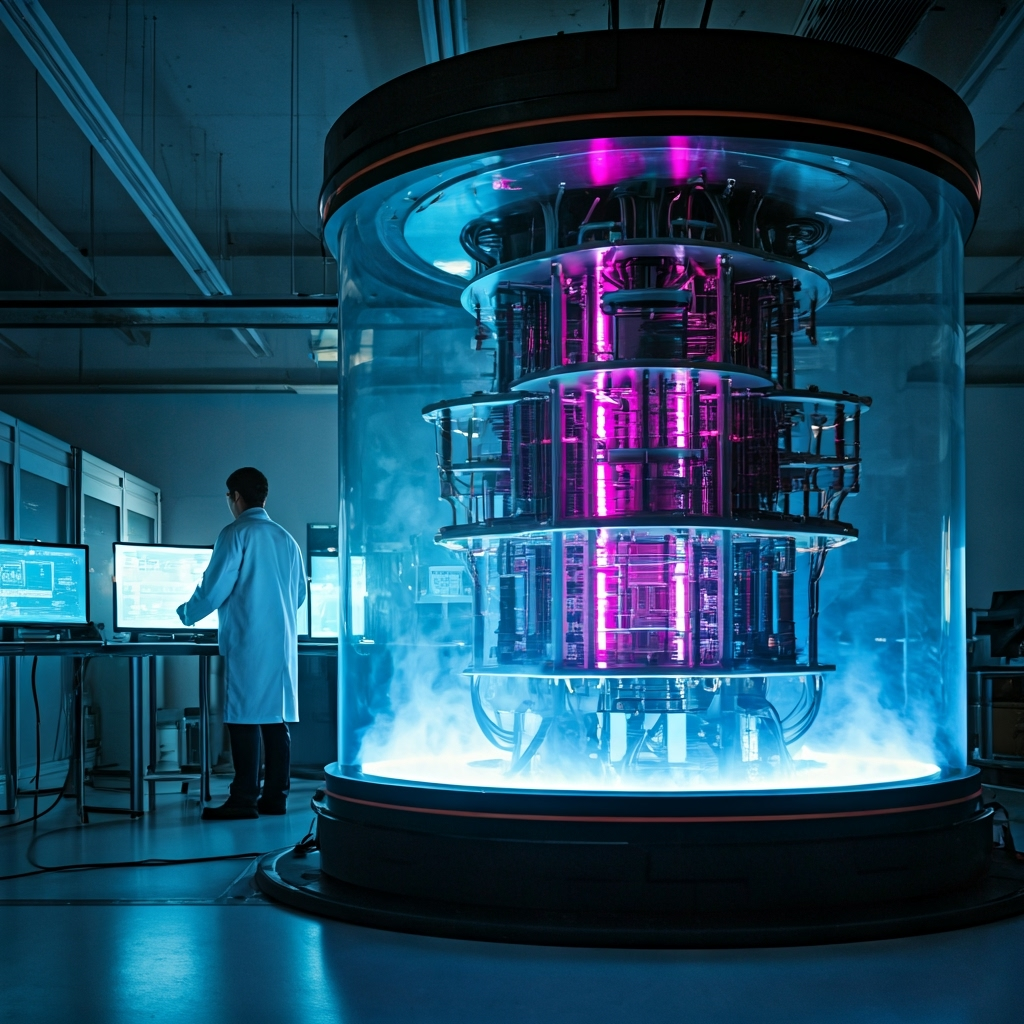
In a significant advancement for the field of quantum computing, IBM and Japan’s National Institute of Advanced Industrial Science and Technology (AIST) have announced a landmark collaboration to build a next-generation, 10,000-qubit quantum-centric supercomputer. This powerful machine represents a crucial step in the global race to develop fault-tolerant quantum systems capable of solving problems far beyond the scope of today’s most powerful classical supercomputers.
The project is a cornerstone of a ten-year partnership between the two organizations, backed by substantial investment from the Japanese government. The new system will be housed in the AIST facility in Japan and is designed to tackle complex computational challenges in fields like drug discovery, materials science, and financial modeling. Unlike purely quantum processors, this machine is a “quantum-centric supercomputer,” meaning it will tightly integrate multiple 1,000-qubit IBM quantum processors with advanced classical computing resources, including CPUs and GPUs. This hybrid approach allows the system to manage complex workflows, leveraging the unique strengths of both quantum and classical computation.
IBM aims to deliver the full 10,000-qubit system by 2029. The collaboration is expected to not only push the boundaries of hardware but also foster a new generation of quantum-native software and algorithms. Researchers believe that systems of this scale are necessary to begin demonstrating “quantum advantage”—the point at which a quantum computer can perform a real-world task more efficiently or accurately than any classical counterpart.
The announcement positions IBM as a formidable leader in the quantum hardware race, competing with major efforts from companies like Google, Quantinuum, and various state-backed initiatives. This international partnership underscores the massive resources and collaborative effort required to transition quantum computing from an experimental science into a transformative technology.
 English
  Deutsch