

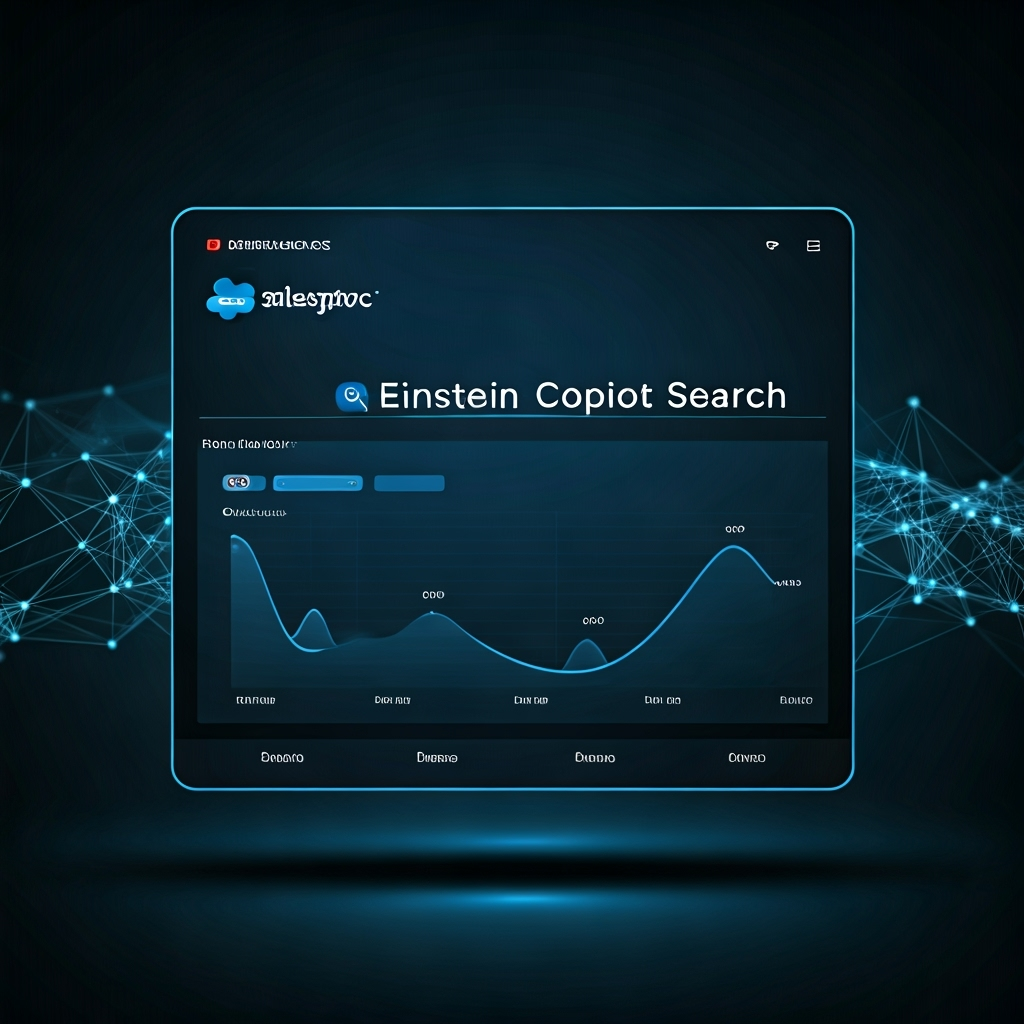
Salesforce has officially launched its Einstein Copilot Search and a native Data Cloud Vector Database, integrating powerful new AI capabilities directly into its core platform. Announced this week, the move is designed to help businesses build more accurate and trusted generative AI applications by grounding them in their own proprietary company data.
The new features directly address a critical challenge in enterprise AI: ensuring that large language models (LLMs) provide relevant, secure, and fact-based responses. By incorporating a native vector database, Salesforce allows customers to store and search unstructured data—such as product documentation, past customer service cases, and internal knowledge articles—without relying on complex third-party integrations. This process, known as Retrieval-Augmented Generation (RAG), enables the Einstein Copilot to retrieve specific, relevant information from a company’s trusted data before generating an answer.
According to Salesforce, this integration will significantly improve the performance of AI-powered assistants across its Sales Cloud, Service Cloud, and other products. For example, a service agent could use the copilot to instantly find solutions from thousands of historical support tickets, or a sales representative could generate a personalized email summary based on recent client communications and internal product updates.
This development positions Salesforce to compete more aggressively with other major tech players like Microsoft and Google, who are also building comprehensive enterprise AI ecosystems. By embedding RAG and vector search capabilities natively, Salesforce is leveraging its greatest asset: the vast amount of trusted customer data already managed within its Data Cloud. The company is betting that this unified, data-centric approach will offer a more secure and seamless path for businesses looking to deploy generative AI at scale.
 English
  Deutsch