

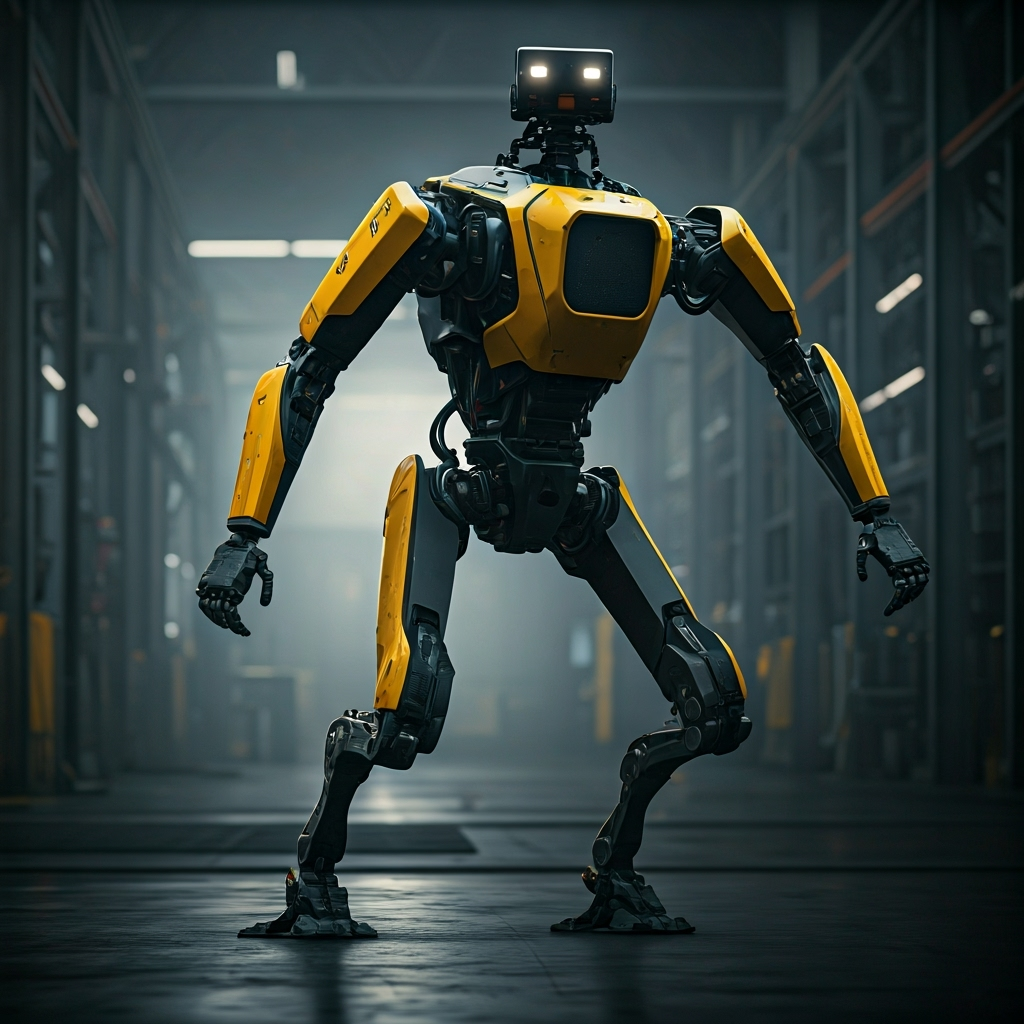
Boston Dynamics has officially retired its iconic hydraulic Atlas robot, immediately followed by the stunning reveal of a new, fully electric successor designed for real-world commercial applications. The company released a video showcasing the new model’s capabilities, which far exceed the agility and flexibility of its predecessor.
For years, the hydraulic Atlas captured the public imagination with its ability to run, jump, and perform complex gymnastic routines. However, the company released a “farewell” video this week, showing the robot’s impressive but often clumsy history, before announcing its retirement. The very next day, a new video introduced a completely redesigned electric Atlas. This new version is not only stronger and more agile but also features a sleeker, less imposing design.
The reveal video demonstrated the robot’s uncanny range of motion. In one sequence, it lies face down before twisting its legs and torso 180 degrees to stand up—a movement impossible for a human and difficult for the previous hydraulic model. The electric actuators allow for faster, quieter, and more precise movements, making the robot better suited for work in human-centric environments.
This move signals a significant strategic shift for Boston Dynamics, which is owned by Hyundai. The company is moving beyond research and development and aiming squarely at commercialization. The new Atlas is intended to be a practical tool for manufacturing, logistics, and other industrial settings. Boston Dynamics announced that it will begin testing the new Atlas in Hyundai’s automotive manufacturing plants in the coming years.
The development of a commercially viable humanoid robot marks a major milestone in the field of robotics. While the hydraulic Atlas was a groundbreaking research platform, the all-electric version represents a tangible step toward integrating advanced robots into the global workforce, promising to tackle tasks that are dull, dirty, or dangerous for humans.

 English
  Deutsch