

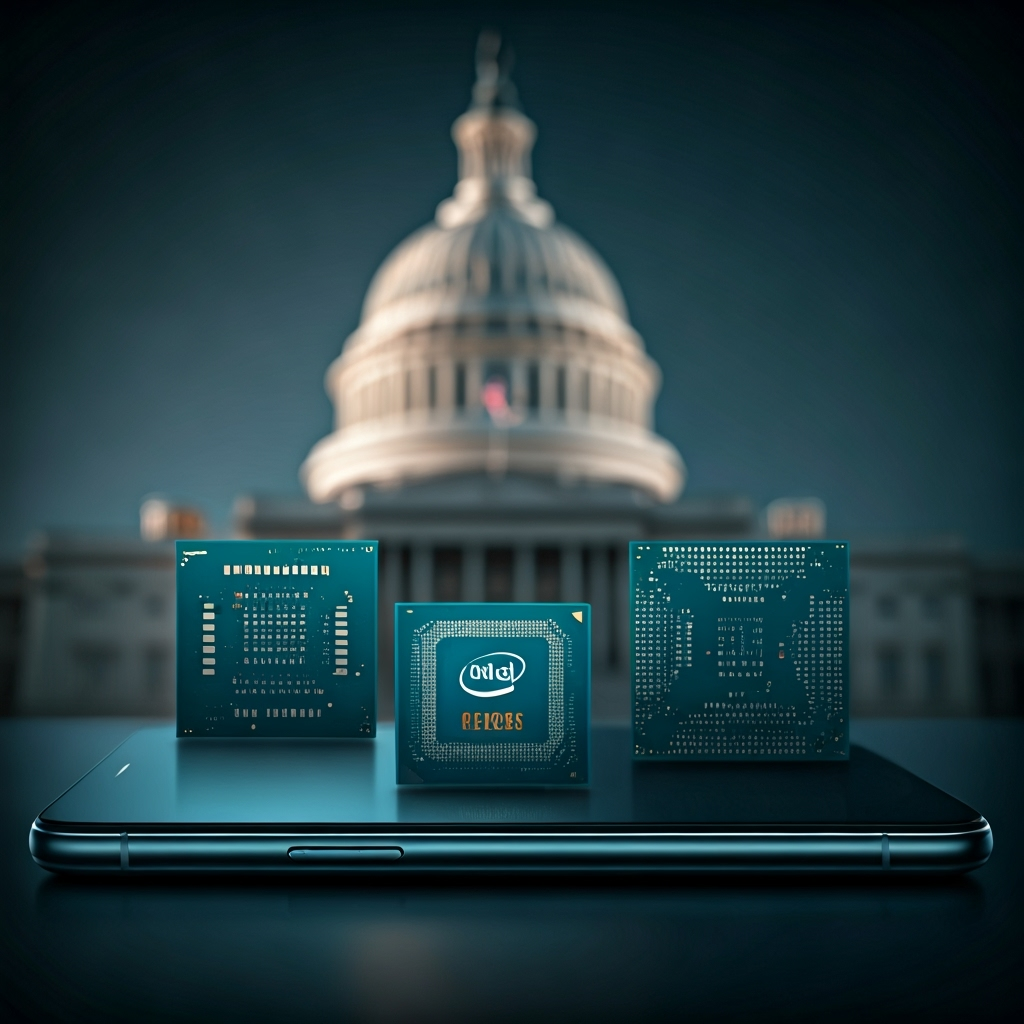
The Biden administration has significantly tightened its technological blockade against Huawei, revoking existing export licenses held by U.S. chipmakers Intel and Qualcomm. The move, confirmed by the Commerce Department, immediately halts all shipments of American-designed semiconductors to the Chinese technology giant, escalating the long-running trade dispute between the two nations.
This action targets the core of Huawei’s consumer electronics business, which had recently shown signs of a comeback. Intel had been supplying the processors for Huawei’s new line of AI-powered laptops, the MateBook X Pro, which were unveiled just last month. Similarly, Qualcomm had a license to provide 4G-capable chips for Huawei’s smartphones, a critical component since Huawei was barred from acquiring 5G technology from U.S. firms.
The Commerce Department stated the decision was made to counter a “continuing threat to our national security and foreign policy.” This move aligns with broader U.S. strategy to limit China’s access to advanced technology, particularly in areas with potential military applications. The revocation of existing licenses is a more aggressive step than simply denying new applications, signaling a hardening stance from Washington.
For Huawei, the ban is a severe blow, forcing it to rely entirely on its domestic chip development, which still lags behind U.S. technology in performance and scale. While the company has made impressive strides with its own Kirin processors, the sudden cut-off will disrupt its production lines and product roadmaps. Both Intel and Qualcomm have stated that the financial impact will be limited, as they had already anticipated a decline in business with Huawei, but the decision nonetheless removes a notable revenue source and adds further uncertainty to the global semiconductor supply chain. The industry now watches to see how Huawei—and Beijing—will respond to this latest escalation.
 English
  Deutsch