

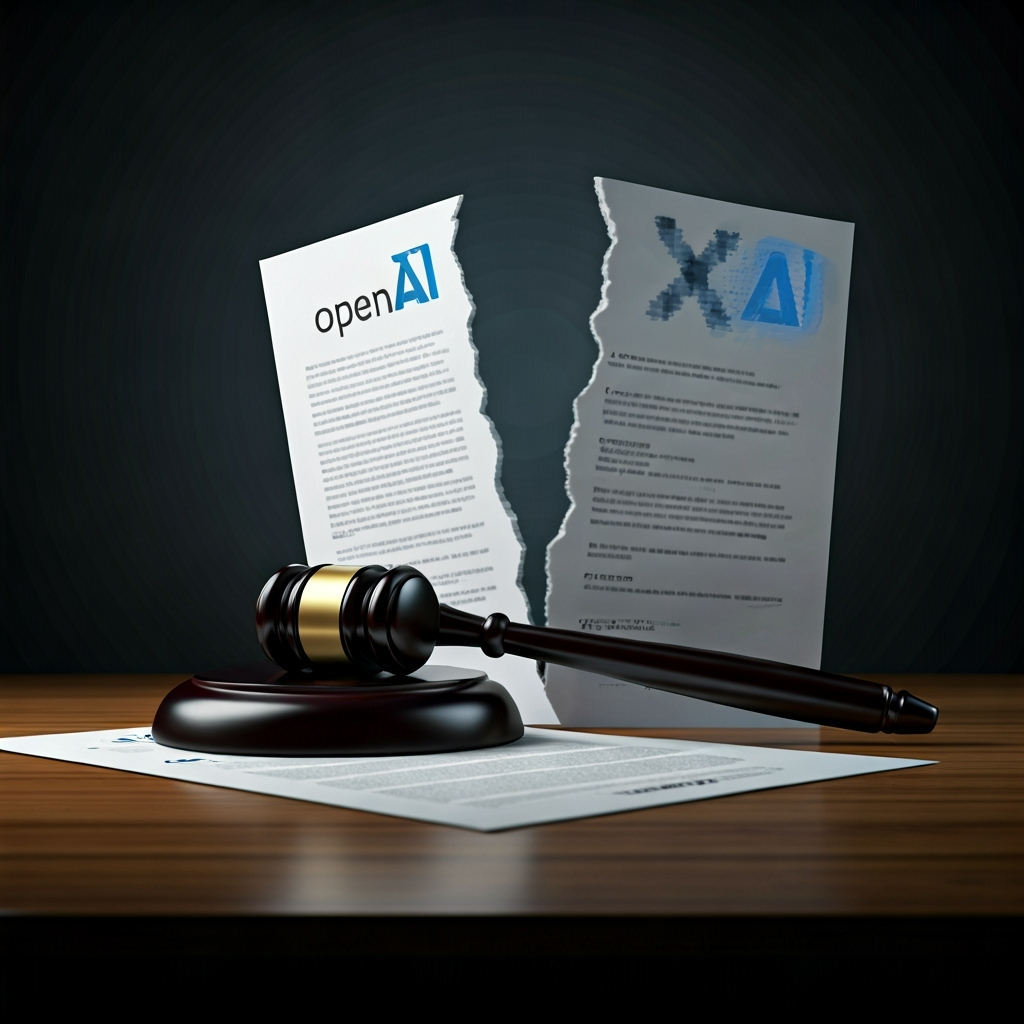
In a surprising move, Elon Musk has withdrawn his lawsuit against OpenAI and its CEO, Sam Altman. The lawsuit, filed in a San Francisco superior court in February, accused the AI research company of betraying its founding mission to develop artificial general intelligence (AGI) for the benefit of humanity, not for profit.
Musk, one of OpenAI’s original co-founders, had alleged that the company’s pivot to a for-profit structure and its exclusive partnership with Microsoft constituted a breach of contract. The legal challenge centered on the claim that OpenAI had become a “de facto closed-source subsidiary” of the tech giant, abandoning its non-profit, open-source principles.
The notice of dismissal was filed on Tuesday, just one day before a scheduled court hearing where a judge was expected to rule on OpenAI’s motion to dismiss the case. The filing was made “without prejudice,” which legally allows Musk the option to refile the lawsuit at a later date.
The timing is significant, as Musk has recently intensified his public criticism of OpenAI, particularly following its announced integration with Apple’s iOS. Musk threatened to ban Apple devices from his companies—including Tesla, SpaceX, and X—citing security risks from the potential OS-level integration of OpenAI’s technology.
While neither Musk nor his legal team has commented on the reason for the withdrawal, industry analysts speculate it could be a strategic pivot. With the lawsuit potentially facing dismissal and his own AI venture, xAI, competing directly with OpenAI, Musk may be shifting his focus from legal battles to market competition. This withdrawal ends a high-profile legal drama that underscored the deep ideological rifts within the AI community over the path to AGI and the ethics of commercialization.

 English
  Deutsch